Agriculture as a Pathway to Dignity and Resilience for Women in Burundi
A way of life under pressure
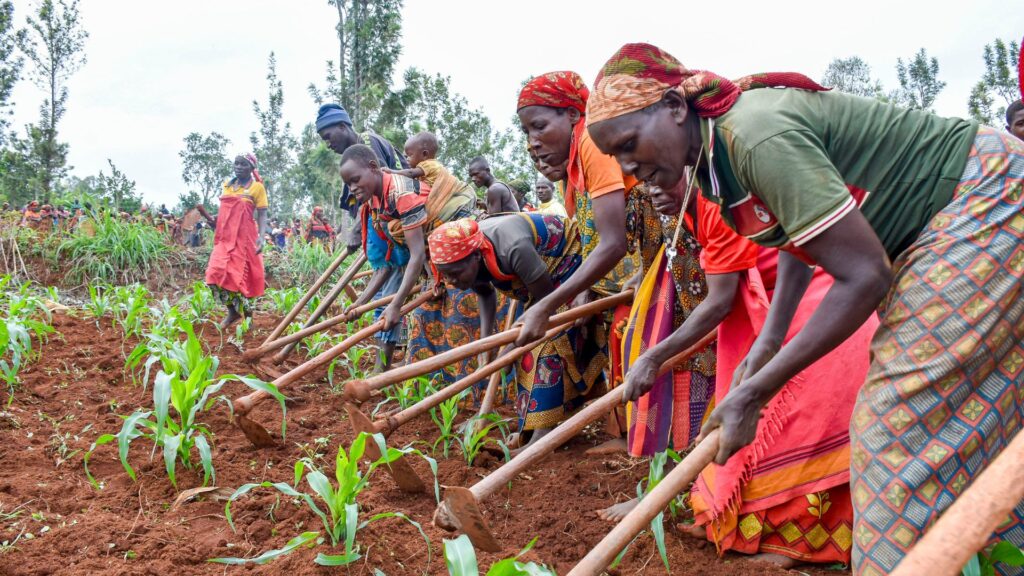
In many communities across Burundi, agriculture is a way of life. For countless families, it provides daily nourishment and, when harvests allow, a modest income that supports essential needs.
Yet this reality is under pressure. Climate change, shrinking land availability, and increasingly unpredictable seasons are making it harder for families, especially women to rely on traditional farming practices alone. For rural women, whose hands till most of Burundi’s fields, the stakes are particularly high.
Starting with what women already know
At Faith in Action Africa, we do not begin by introducing something entirely new. We start with what women are already doing, building on their knowledge, their effort, and their resilience.
The focus is simple: help them make more from the little they have.
This approach respects the expertise women have carried for generations, while opening the door to techniques that can strengthen food security and household income.
Learning together through Self-Help Groups
Within Self-Help Groups (SHGs), women gather regularly not only to save and support one another, but also to learn. These groups have become a steady rhythm of community life, a space where practical knowledge travels quickly from one woman to the next.
Through these gatherings, women are accompanied as they adopt modern, climate-smart farming techniques suited to their context. Conversations range from soil management and seed selection to composting, crop rotation, and maximizing small plots of land for better yields.
The learning is hands-on, peer-led, and rooted in trust — three conditions that allow real change to take hold.
From a small plot to a stronger voice
Beyond techniques, women begin to see possibilities where there was once limitation. A small piece of land becomes enough to feed a family. A surplus, however modest, becomes income. And income becomes a voice in household decisions, a step toward greater participation in community life.
This is how change unfolds quietly, steadily, and collectively.
It rarely arrives as a single dramatic moment. It arrives as a neighbor asking for advice, a daughter staying in school, a harvest shared across a lean season.
Small actions, lasting change
By strengthening what already exists, women are not only improving their harvests; they are nurturing resilience, restoring dignity, and shaping a more secure future for their families and their communities.
At Faith in Action Africa, we believe this is how sustainable transformation takes root not imposed from the outside, but grown from within.